Resilient by Design: Organic Food & Farming Systems amid CAP Volatility
– Science-Based Pathways for Climate, Nature, and Food
Ustica Island (Palermo), June 23-25, 2026 (ITALY)

Date and Location
- June, 2026, Ustica Island (Palermo), Italy
The Workshop is jointly organized by the Italian Gruppo di Ricerca in Agricoltura Biologica (GRAB-IT) and the International Society of Organic Farming Research (ISOFAR).
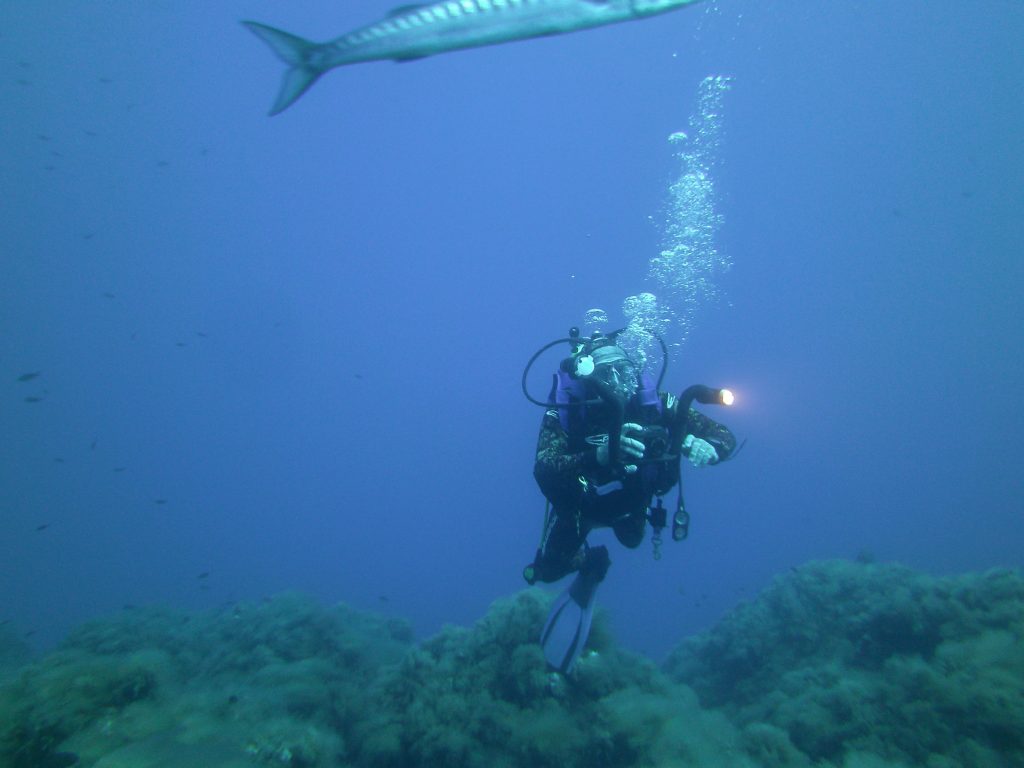
Ustica Island is one of the best-known islands in the entire world. The Seminar will be held at Municipal Conference Hall.
Theme
Organic food and farming systems are entering a decisive phase. Once a niche, organic agriculture has become a global driver of sustainability, contributing to healthier diets, biodiversity protection, and climate mitigation. Building on the vision of Organic 3.0, the sector is now challenged to innovate further—toward resilient, science-based, and socially inclusive agri-food systems capable of withstanding policy volatility, market uncertainty, and environmental pressures.
The accelerating impacts of climate change, biodiversity loss, and geopolitical disruptions—together with shifting incentives under the evolving Common Agricultural Policy (CAP)—require organic and agroecological systems to strengthen their adaptive capacity. This means moving beyond a farm-level perspective and embracing a comprehensive food-systems approach that integrates production, processing, consumption, and policy governance.
Key challenges include:
- Ensuring sufficient, safe, health-promoting, and affordable food for a growing global population
- Reducing pollution, resource use, and greenhouse gas emissions across the entire food chain
- Building circular food systems based on renewable energy, nutrient recycling, and minimized waste
- Adapting to climate change while enhancing mitigation potential
- Protecting soils, water, air quality, ecosystems, biodiversity, and landscapes
- Responding to evolving societal values, consumption patterns, and ethical expectations
Against this backdrop, research and scientific innovation play a pivotal role in guiding the transition to robust, future-proof organic systems.
The workshop welcomes contributed papers and poster presentations on how organic and agroecological farming can address global challenges and related uncertainties. Submissions may address, but are not limited to, the following topics:
- Resilience of organic farming systems under CAP reform and subsidy volatility
- Digital and precision-technology integration in organic agriculture
- Circular nutrient flows and closed-loop organic farming models
- Soil microbiome enhancement and regenerative practices within organic systems
- Innovations in organic breeding, seed systems, and genetic resources
- Organic seed system resilience and biodiversity under global supply-chain disruptions
- Climate-adaptive organic cropping systems and agroecological practices
- Trust, integrity, and digital traceability in organic supply chains
- Renewable energy integration, agrivoltaics, and the energy-organic farming nexus
- Novel feed sources (algae, insects, seaweed) within organic pathways
- Waste reduction, recycling, and bio-based packaging in organic systems
- Landscape-level ecosystem services and multifunctionality of organic farming
- Short supply chains, localisation, and community governance for resilience
- Spatial spill-over effects between organic and conventional farming systems
- Organic aquaculture in marine and freshwater systems
- Soil and water conservation, nutrient cycling, and carbon-smart farming
- Ecosystem services and functional biodiversity
- Digital certification and participatory guarantee systems for small-scale organic farms
- Business models, value chains, and logistics for high-quality organic food
- Policy modelling for organic farming under climate-nature-food targets and CAP scenarios
- Social innovations, participatory governance, and community-based food networks
- Market trends, consumer trust, credence attributes, and sensory expectations
- Marginal rural areas regeneration through organic agriculture
Accepted contributions will be organized into thematic tracks.
Submission procedure, review process and time schedule
Papers are welcome from all disciplines. A structured abstract of max 5000 characters (spaces included) is required for evaluation following this template:
Introduction: [Briefly frame the context, the problem, the reseach question, and the objective(s) of the study.]
Methods: [Summarize design, approach, indicators, and key methodological choices (e.g., sampling, models, comparisons).]
Data: [ Describe data sources, period, units of analysis, variables, and any preprocessing or quality checks].
Results and discussion: [Report the main findings (key numbers, patterns, and/or qualitative insights) and highlight what is novel in reference to previous research].
Conclusions: [State the take-home message, implications for practice/policy (e.g., CAP), limitations, and next steps.]
References (max 10, APA style)
Altieri, M. A. (2018). Agroecology: The science of sustainable agriculture (3rd ed.). CRC Press.
Badgley, C., Moghtader, J., Quintero, E., Zakem, E., Chappell, M. J., Avilés-Vázquez, K., Samulon, A., & Perfecto, I. (2007). Organic agriculture and the global food supply. Renewable Agriculture and Food Systems, 22(2), 86–108.
Authors will submit the abstract by March 20, 2026 at this LINK.
Specific instructions for abstract and, for those who want to participate in the Best Paper Award competition, full paper submission will be provided directly on EasyChair.For the Best Paper awards, participants may submit a Full Paper by May 30, 2026 on Organic Agriculture (Springer), where they will undergo the usual round of reviews. Accepted paper will be published in a dedicated Collection. Among the competitive papers, the scientific committee will select up to three Best Papers that will be disclosed and awarded during the Workshop.
Language
The official language of the seminar will be English.
Deadlines
- March 20, 2026: abstract submission
- March 30, 2026: notification of acceptance
- April 15, 2026: Early bird registration ends
- May 30, 2026. Submission of competitive papers for Best Paper Award.
- June 1, 2026. Registration ends. Due to the limited capacity of the Ustica Island, no registration will be accepted after that date.
Registration and Participation fees
Participants are kindly asked to register by April 15, 2026 (Early bird registration deadline) through this link
| Registration fees* | By April 15, 2026 | Later than April 15, 2026 |
| Ordinary | € 330,00 | € 450,00 |
| PhD students/Students | € 200,00 | € 250,00 |
To be registered for the workshop participants should pay the GRAB-IT membership fee (€ 35 annual association fee 2026 – new members; €30 – existing members).
The registration fees include:
- an information package,
- 3 coffee breaks,
- 2 lunches,
- one poster happy hour, and
- one social dinner (on the second day).
To present a paper at least one of the authors listed on the manuscript must be registered at the conference.
Accommodation is not included. A list of suitable hotels and information concerning transport will be provided on the Workshop web page.
Cancellation policy
If cancellation is confirmed by May 2nd, 2026 (only written cancellation will be accepted) fees will be refunded, a cancellation fee of € 50,00 will be however charged to cover administrative expenditures. Cancellation received after May the 2nd, 2026 will not be eligible for any fee refund.
International Scientific Committee (provisional list — further members to be confirmed)
Raffaele Zanoli (Chair) – Università Politecnica delle Marche, Ancona, Italy & ISOFAR
Simona Naspetti (Chair) – Università Politecnica delle Marche, Ancona, Italy
Gianni Cicia – University of Napoli Federico II and Centro di Portici, , Napoli, Italy
Teresa Del Giudice– University of Napoli Federico II and Centro di Portici, Napoli, Italy
Massimo Fagnano – University of Napoli Federico II, Napoli, Italy
Giorgio Schifani – Università degli Studi di Palermo, Palermo,taly
Stefano Colazza – Università degli Studi di Palermo, Palermo, Italy
John Togersen – MAPP, Aarhus University, Aarhus, Denmark
Reza Ardakani – Azad University, Karaj, Iran & ISOFAR
Patrizia Pugliese, CIHEAM Bari, Valenzano, Italy
Giovanni Dara Guccione, CREA-PB, Palermo
Paola Migliorini, Università di Scienze Gastronomiche, Pollenzo , Italy
Ulrich Schmutz, University of Coventry, Coventry, UK
Mahesh Chander, ICAR- Indian Veterinary Research Institute, Izatnagar, India & ISOFAR
Adrian Mueller, Research Institute of Organic Agriculture FiBL, Switzerland
David Wahyudi, Bakrie University, Indonesia & ISOFAR
Bodapati Subrahmanyeswari, Sri Venkateswara Veterinary University, AP, India & ISOFAR
Khaled Sassi, University of Carthage, INAT, Tunisia & ISOFAR
Yoko Taniguchi, Setsunan University, Japan & ISOFAR
Jochem Meyer, Agroscope, Switzerland
Katrin Zander, University of Kassel, Faculty Organic Agricultural Sciences, Germany
Local Organisation Committee
Giuseppina Migliore, UNIPA
Giovanni Dara Guccione, CREA-PB
Giuseppina Rizzo, UNIPA
Riccardo Testa, UNIPA
Daniela Vairo, UNIVPM
Emel Ozturk, UNIVPM
Serena Mandolesi, UNIVPM
Alessandra Vaccaro, CREA-PB
Francesco Vella, UNIPA

Lascia un commento